Best PoE Injectors and Extenders
The TP-Link POE160S injector ($19.99) is the best all-around choice for adding one camera to a non-PoE switch, delivering the full 30 W that 802.3at reserves for a class 4 device such as a PTZ camera.
An injector and an extender solve two different problems that both come up in a camera install. An injector adds PoE power to a single Ethernet run when the switch or router at the other end has no PoE of its own. An extender does something different: it repeats both the data and the power partway along a run so a camera can sit farther than the standard 100 meter Ethernet limit allows.
Both devices only matter if they carry enough power for the camera on the other end, and both are governed by the same IEEE 802.3af and 802.3at wattage classes covered on the switch and cable pages.
| Device | Type | Standard | Power/reach | Price |
|---|---|---|---|---|
| TP-Link POE150S | Injector | 802.3af | 15.4 W | $15.99 |
| TP-Link POE160S | Injector | 802.3at | 30 W | $19.99 |
| Revotech 2-Port Extender | Extender | 802.3af/at | +100 m, cascades to 700 m | $16.79 |
| VIMIN 2-Port Extender | Extender | 802.3af/at | +100 m, gigabit | $19.79 |
Injector or extender: which do you need?
Reach for an injector when you have one camera and a switch, router or NVR port with no PoE capability at all. It sits between that non-PoE port and the camera, adding power to the same cable that already carries data. Reach for an extender when the problem is distance rather than power source: a run longer than 100 meters needs its signal and its power both repeated partway along the cable, and an extender does both at once.
Which injector matches your camera's PoE class?
The TP-Link POE150S supplies up to 15.4 W, the standard 802.3af allocation that covers a typical fixed bullet or dome camera. The TP-Link POE160S steps up to 30 W, the 802.3at allocation needed by a PTZ camera or a camera with a built-in heater. Buying the 30 W injector by default costs a few dollars more and removes the guesswork of matching injector to camera class exactly.
Beginner pick: one fixed camera, cheaply
The TP-Link POE150S covers a single fixed bullet or dome camera at the 15.4 W a standard 802.3af device needs, at the lowest price in this category.
Intermediate pick: any camera, PTZ included
The TP-Link POE160S's 30 W budget covers a PTZ camera or heated housing as well as a standard fixed camera, so it is the safer default when you are not certain of the exact power class a given camera negotiates.
Expert pick: extending past the 100 meter limit
The VIMIN 2-port extender repeats both power and data another 100 meters past the standard limit, and its gigabit throughput matters when the extended run is carrying one or two 4K camera streams rather than lower resolution video. The Revotech extender covers the same 100 meter extension at 10/100 Mbps and can be cascaded up to six units deep for a combined 700 meter run, which is useful for a single lower resolution camera at real distance, such as a driveway gate far from the house.
How we chose these injectors and extenders
We did not run cable out to 700 meters ourselves to confirm the cascading claim on the Revotech extender. The wattage and standard compliance figures above come from each manufacturer's published specification, checked against the IEEE 802.3af and 802.3at wattage classes, not from a distance test we conducted in the field.
The gear that matches this answer

TP-Link Omada PoE+ Injector, Up to 30W, Gigabit, POE160S
$19.99Thirty watts is the full 802.3at allocation, so this injector will run anything up to and including a small PTZ camera.
- PoE standard
- 802.3at
- PoE budget
- 30 W
Prices change often.
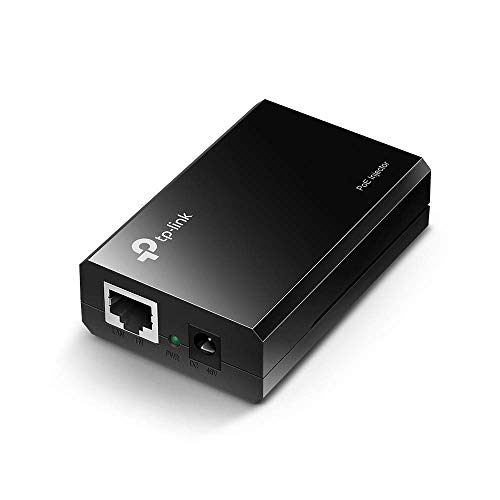
TP-Link Omada PoE Injector, Up to 15.4W, Gigabit, POE150S
$15.99The 802.3af version at a lower price, which is all a fixed bullet or dome camera needs.
- PoE standard
- 802.3af
- PoE budget
- 15.4 W
Prices change often.

Revotech 2 Port PoE Extender, PoE+ Repeater, 100 Meters
$16.79The standards compliant answer to a run longer than 100 metres, which is a real constraint on any property with a gate or an outbuilding.
- PoE standard
- 802.3af/at
Prices change often.

VIMIN 2-Port Gigabit PoE Extender, 1 in 2 Out PoE Repeater
$19.79Gigabit rather than 100 Mbps, which matters when two 4K streams share the extended run.
- PoE standard
- 802.3af/at
Prices change often.

TRUE CABLE Cat6 Direct Burial Bulk Ethernet Cable, Unshielded, 1000ft, 23AWG Solid Bare Copper
$277.99Direct burial rated with a solid bare copper conductor at 23AWG, which is the thickest common gauge and therefore the least voltage drop over a long PoE run.
- Cable category
- Cat6
- Conductor gauge
- 23 AWG
- Conductor
- Solid bare copper
- Length
- 1000 ft
Prices change often.
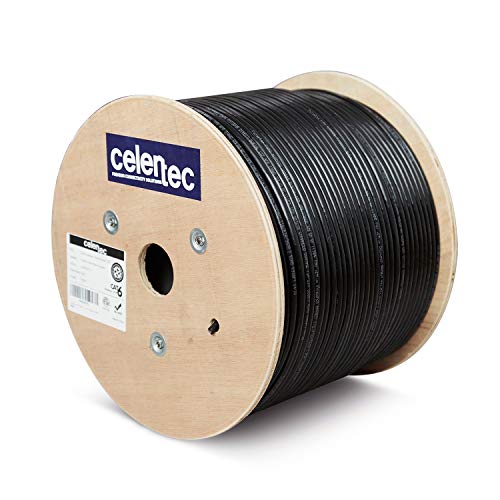
celertec CAT6 Outdoor Cable, 1000ft, 23AWG Solid Bare Copper, Unshielded
$219.99Solid bare copper at 23AWG for noticeably less than the TRUE CABLE equivalent, for outdoor runs that are not being buried.
- Cable category
- Cat6
- Conductor gauge
- 23 AWG
- Conductor
- Solid bare copper
- Length
- 1000 ft
Prices change often.
Common questions
What is the difference between a PoE injector and a PoE switch?
A PoE injector adds power to a single Ethernet cable run for one device, typically when connecting to a router or NVR port that has no PoE capability of its own. A PoE switch supplies power across multiple ports at once from a shared total budget. An injector is the right tool for adding one camera to an otherwise non-PoE setup; a switch is the right tool for a multi-camera install.
Can I use a PoE extender to go past 100 meters?
Yes. A PoE extender placed within the standard 100 meter Ethernet channel repeats both the data signal and the power for another segment, effectively resetting the distance limit. Some extenders can be cascaded, adding another segment each time, though real world reliability drops as more units are chained together.
How do I know if I need a 15.4 W or 30 W injector?
A standard fixed bullet or dome camera typically negotiates the 802.3af class that needs 15.4 W. A PTZ camera, a camera with a built-in heater, or anything with moving parts typically needs the higher 802.3at class at 30 W. If you are not certain which class your camera uses, buying the 30 W injector covers both cases.
Does a PoE extender slow down my camera's video?
Some lower cost extenders cap the connection at 10 or 100 Mbps in extend mode, which is still enough bandwidth for most single camera streams but can bottleneck a high resolution 4K feed. A gigabit rated extender avoids that ceiling and is worth the small price difference when the extended run is carrying 4K video.
Can I chain multiple PoE extenders together?
Some extenders are rated for cascading, adding roughly another 100 meters of reach with each additional unit, up to a manufacturer-specified maximum. Each hop adds a small amount of signal degradation and another point of failure, so a cascaded run should be treated as the exception for reaching a genuinely remote camera, not the default way to wire a property.
Get the system planning sheet
The camera count, storage and PoE budget worksheet, plus the wiring checklist, as one printable page.
Keep going
Before you point a camera at anything. Aim cameras at your own property and your own boundary, never into a neighbour's windows or across their garden. Cameras in bedrooms, bathrooms, or anywhere else a person reasonably expects privacy are a serious legal problem, and that includes guests, lodgers and anyone who works in your home. Audio is legally different from video, many US states require the consent of every party to a recorded conversation, and several recorders capture audio by default, so check your own state before you enable it. Some places require visible notice that recording is taking place, and landlords and homeowner associations often impose their own rules on top. This is researched general information and not legal advice, and the law varies by state and by country.
And once it is installed. Change every default password, keep the firmware updated, and be clear with yourself about where the footage goes: a cloud camera means a third party holds recordings of your home, while a local recorder keeps them in your house. That is a genuine buying consideration, not a technicality.