DORI Distance Calculator
The DORI standard sets four thresholds in pixels per metre of scene: 25 to detect, 62.5 to observe, 125 to recognise and 250 to identify. A 4K camera on a 2.8 mm lens identifies to about 28 feet and merely detects to about 276 feet.
Values update as you change the inputs. Where a figure cannot be computed honestly from what manufacturers publish, this calculator says so rather than showing a zero.
Cameras with the reach to change this
Optical zoom is the only thing that adds pixels to a distant subject. Digital zoom does not.

REOLINK RLC-823S1 4K PoE PTZ Camera, 5X Optical Zoom
$246.49Five times optical zoom multiplies pixels per metre at the far end of a drive by five, which no amount of sensor resolution on a fixed wide lens will do.
- Resolution
- 8 MP
- Optical zoom
- 5 x
Prices change often.
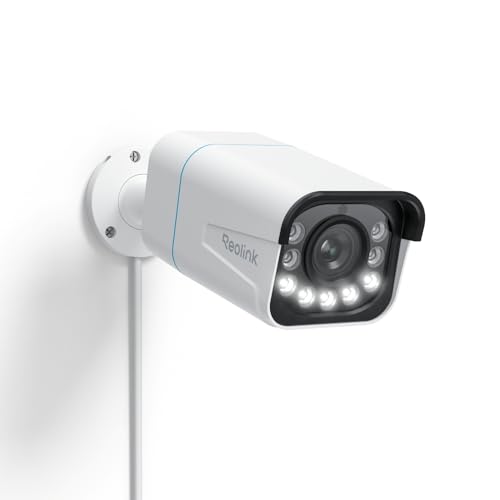
REOLINK RLC-811A PoE Security Camera, 5X Optical Zoom, 4K
$139.99The same five times optical zoom in a fixed bullet body rather than a motorised head, which is cheaper and has nothing in it that can seize.
- Resolution
- 8 MP
- Optical zoom
- 5 x
Prices change often.

REOLINK TrackMix PoE Dual-Lens PTZ Security Camera, 6X Hybrid Zoom
$199.99Two lenses at once, one wide for context and one telephoto for detail, which resolves the usual argument between covering the whole drive and identifying anyone on it.
- Resolution
- 8 MP
Prices change often.

REOLINK E1 Outdoor SE PoE 4K Camera with Pan and Tilt
$119.99Pan and tilt on a small PoE body, useful where one camera has to cover two directions that are not adjacent.
- Resolution
- 8 MP
Prices change often.
The formula
distance = horizontal pixels / (required pixels per metre x 2 x tan(field of view / 2))
Identification needs ten times the pixel density of detection, which is why the identify distance is a tenth of the detect distance on the same camera. Digital zoom changes none of this because it adds no pixels.
Common questions
What is the DORI standard for security cameras?
DORI, from EN 62676-4, sets four pixel density thresholds for what a camera can meaningfully show at distance: 25 pixels per metre to detect a person is there, 62.5 to observe their behaviour, 125 to recognise someone already known, and 250 to identify a stranger to an evidential standard. Identify needs ten times the pixel density that mere detection needs.
How far can a 4K camera identify someone?
A 4K, 3840 pixel wide camera on a 2.8 mm lens reaches the DORI identify threshold, 250 pixels per metre, at roughly 27.6 feet. The same camera can still merely detect a person, at 25 pixels per metre, out to about 276 feet, exactly ten times farther, because identification requires ten times the pixel density that detection needs.
Does digital zoom increase how far a camera can identify a person?
No. Digital zoom crops and enlarges pixels the sensor already captured, adding no new pixel data, so it does not change pixels per metre of the actual scene and does not extend any DORI distance at all. Only optical zoom, a physically longer focal length, or moving the camera closer adds real pixel density and pushes the identify distance farther out.
Why is the identify distance so much shorter than the detect distance?
Because DORI identify requires 250 pixels per metre of scene while detect requires only 25, a tenfold difference in pixel density. Since distance in this geometry is inversely proportional to the required density, the identify distance works out to exactly a tenth of the detect distance for the same camera and lens, which is why a camera spotting someone at 276 feet may identify them only at 28 feet.
Does a higher megapixel camera always reach farther for identification?
It helps, but not in direct proportion to megapixels. DORI distance scales with horizontal pixel count, not total megapixels, so an 8MP, 3840 pixel wide camera reaches DORI thresholds at twice the distance of a 1080p, 1920 pixel wide camera, not four times, even though 8MP has roughly four times the total pixel count that 1080p has.
Get the system planning sheet
The camera count, storage and PoE budget worksheet, plus the wiring checklist, as one printable page.
Keep going
A calculated figure is a planning number, not a promise. Every answer here comes from published standards and manufacturer specifications, and real installations vary with light, weather, scene motion and how a camera is actually aimed. Where a figure cannot be computed honestly from what manufacturers publish, this calculator says so rather than showing a zero.
Before you point a camera at anything. Aim at your own property and your own boundary, never into a neighbour's windows. Cameras in bedrooms, bathrooms or anywhere with a reasonable expectation of privacy are a serious legal problem, including for guests and anyone who works in your home. Audio is legally different from video, many US states require the consent of every party to a recorded conversation, and several recorders capture audio by default, so check your own state before enabling it. This is researched general information and not legal advice.