Motion Detection Zone Size Calculator
Detection needs a person to occupy enough of the frame for the analytics to classify them. At 25 pixels per metre, the DORI detect threshold, a person about 1.7 m tall occupies roughly 43 pixels of height, which is the practical floor for reliable person detection.
Values update as you change the inputs. Where a figure cannot be computed honestly from what manufacturers publish, this calculator says so rather than showing a zero.
Gear that matches this answer
Chosen for this calculation.
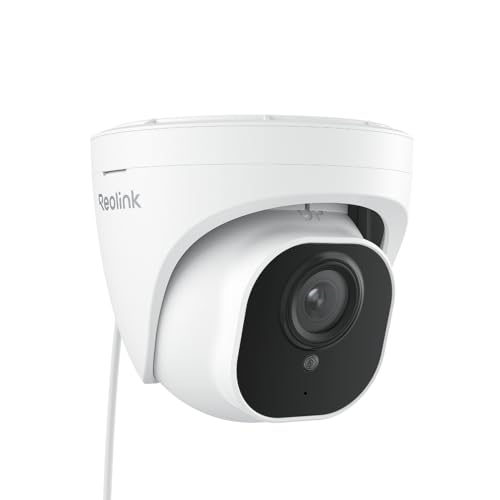
REOLINK RLC-820A 4K PoE Security Camera, Wired Outdoor Dome
$99.99The dome counterpart to the RLC-810A, same sensor and same detection, in a body that does not advertise which way it is looking.
- Resolution
- 8 MP
Prices change often.

REOLINK PoE Security Camera RLC-820A 2 Pack, 4K Outdoor
$194.99Two matched domes, which is the usual front and back pairing.
- Resolution
- 8 MP
Prices change often.

Amcrest UltraHD 4K 8MP Outdoor Security IP Turret PoE Camera, 98ft NightVision
$88.99A turret aims like a bullet but sits in a dome housing, so it avoids the infrared bounce a true dome can get off its own cover glass.
- Resolution
- 8 MP
- Stated IR range
- 98 ft
Prices change often.
Amcrest 5MP Turret PoE Camera, UltraHD Outdoor IP Camera with Mic
$74.99Five megapixels and a built in microphone, and that microphone is the reason to read the audio recording section on this site before switching it on.
- Resolution
- 5 MP
Prices change often.
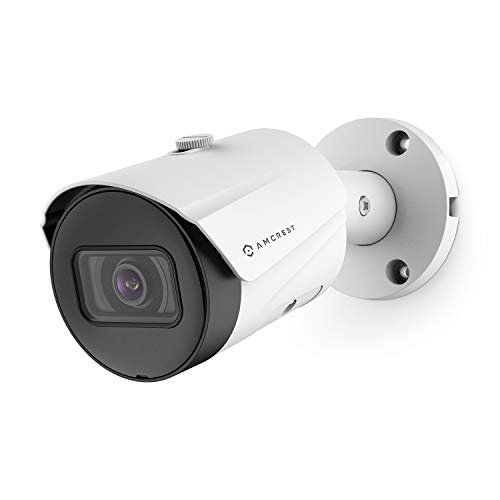
Amcrest 5MP Outdoor PoE Camera 2592x1944p Bullet IP Security Camera, 103 degree Viewing Angle
$48.99The cheapest camera in this catalog from a maker that still ships firmware, and it publishes both its pixel dimensions and its viewing angle so coverage is computable.
- Resolution
- 5 MP
- Field of view
- 103 degrees
Prices change often.
The formula
scene width = 2 x distance x tan(field of view / 2), pixels per metre = horizontal pixels / scene width, person pixels = pixels per metre x person height
False alerts usually come from zones that are too large or too far away rather than from a bad camera. Tightening the zone to the approach path is almost always more effective than raising the sensitivity.
Common questions
How many pixels tall does a person need to be for reliable motion detection?
Roughly 43 pixels of height is the practical floor, corresponding to the DORI detect threshold of 25 pixels per metre applied to a person about 1.7 metres, roughly 5 foot 7, tall. Below that pixel height, analytics software struggles to classify a moving object as a person at all, rather than a shadow, an animal or a passing vehicle.
Why do motion alerts trigger less reliably at longer distances?
Scene width grows with distance while the sensor pixel count stays fixed, so pixels per metre falls as a subject moves farther away, shrinking how many pixels tall that person occupies in frame. Past a certain distance a person drops below the pixel height analytics software needs to classify them reliably, which is why detection turns unreliable at range rather than failing all at once.
What causes false motion alerts, a bad camera or a bad zone?
Usually the zone, not the camera. Motion zones that are too large or extend too far into the distance pick up background movement, like tree branches or passing cars, that never comes close enough to reach a useful pixel density. Tightening the detection zone to the actual approach path a person would use is almost always more effective than raising camera sensitivity settings.
Does a longer focal length lens improve motion detection at distance?
Yes, because a longer focal length narrows the field of view, which increases pixels per metre and therefore how many pixels tall a person occupies at a given distance, compared to a wide angle lens. The tradeoff is a narrower total scene width in frame, so a longer lens improves detection reliability at range while covering less area side to side.
What sensor resolution helps most with reliable motion detection at distance?
Higher horizontal pixel count directly increases pixels per metre at a given distance and lens, since pixels per metre equals horizontal pixels divided by scene width. An 8MP, 3840 pixel wide sensor puts more pixels on a distant person than a 1080p, 1920 pixel wide sensor using the identical lens and distance, roughly double the pixel density in that comparison.
Get the system planning sheet
The camera count, storage and PoE budget worksheet, plus the wiring checklist, as one printable page.
Keep going
A calculated figure is a planning number, not a promise. Every answer here comes from published standards and manufacturer specifications, and real installations vary with light, weather, scene motion and how a camera is actually aimed. Where a figure cannot be computed honestly from what manufacturers publish, this calculator says so rather than showing a zero.
Before you point a camera at anything. Aim at your own property and your own boundary, never into a neighbour's windows. Cameras in bedrooms, bathrooms or anywhere with a reasonable expectation of privacy are a serious legal problem, including for guests and anyone who works in your home. Audio is legally different from video, many US states require the consent of every party to a recorded conversation, and several recorders capture audio by default, so check your own state before enabling it. This is researched general information and not legal advice.