Camera Mounting Height and Tilt Calculator
A camera mounted too high records the top of everyone head and identifies nobody. Around 8 to 10 feet, just out of easy reach, gives a far better angle on a face than the eaves do.
Values update as you change the inputs. Where a figure cannot be computed honestly from what manufacturers publish, this calculator says so rather than showing a zero.
Mounts that let you aim properly
Chosen for this calculation.

Universal Bullet Security Camera Junction Box Mount Bracket, Rainproof
$15.99The connector is the part that fails outdoors, and a junction box is the cheapest way to keep it dry and out of sunlight.
Check price on AmazonPrices change often.

VALUCAM PFA130-E Security Camera Wall and Ceiling Mounting Junction Box, IP66
$17.99An IP66 rating is a published ingress standard rather than a marketing word, and this is the pattern most Dahua and Amcrest bodies are designed to sit on.
Check price on AmazonPrices change often.
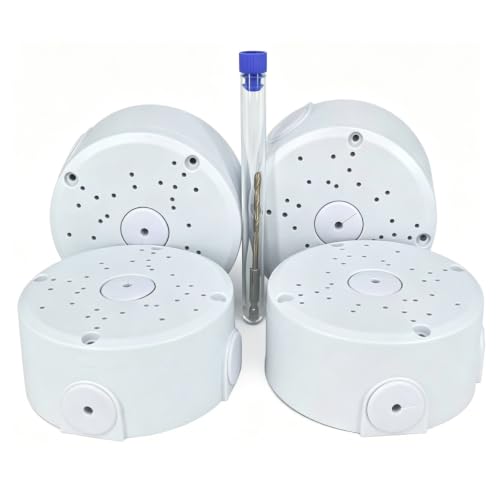
ABS Universal Junction Box for IP Camera Mount Bracket, 4 Pack
$9.99Four boxes for the price of one branded unit, which is the sensible buy when every camera on the house needs one.
Check price on AmazonPrices change often.

compcctv Security Camera Mount Bracket, Aluminum Indoor Outdoor Wall Mount L-Type
$19.99Aluminium rather than plastic, for a camera that has to stay aimed through a winter of wind loading.
Check price on AmazonPrices change often.
The formula
tilt = atan((mount height - face height) / distance), and blind spot = mount height / tan(tilt + half the vertical field of view)
The blind spot is the dead ground between the wall and the bottom of the frame. It is the reason a camera directly above a door often cannot see anyone standing at it.
Common questions
What is the best height to mount a security camera?
Around 8 to 10 feet is the usual sweet spot, high enough to be out of easy reach but low enough to still get a usable angle on a face rather than the top of a head. Mounting a camera up under the eaves, 12 feet or higher, often looks more secure but can actually identify nobody in the footage.
Why do cameras mounted too high fail to identify anyone?
A camera mounted very high looks almost straight down at anyone standing near the wall, so it records the top of a head and shoulders instead of a face. The down tilt angle needed to frame a face at a normal distance grows with mounting height, and past a certain point the angle becomes too steep for a usable, identifiable image.
What is the blind spot under a security camera?
The blind spot is the strip of dead ground directly beneath a camera that its own field of view cannot see, calculated from mounting height divided by the tangent of the tilt angle plus half the vertical field of view. A camera mounted directly above a door with a large blind spot may be unable to see anyone actually standing right at that door.
How do I calculate the down tilt angle for a camera?
Down tilt equals the arctangent of the difference between mounting height and the target face height, divided by the horizontal distance to that target. A camera at 10 feet aimed at a face 5.25 feet off the ground, 20 feet away, needs a down tilt of about 13 degrees to center that face in the frame.
Does a wider vertical field of view create a bigger or smaller blind spot?
A wider vertical field of view actually shrinks the blind spot, because it pushes the bottom edge of the frame further toward the wall at the same tilt angle. A narrow vertical field of view at the same mounting height and tilt leaves a larger strip of dead ground directly beneath the camera that never appears anywhere in the frame.
Get the system planning sheet
The camera count, storage and PoE budget worksheet, plus the wiring checklist, as one printable page.
Keep going
A calculated figure is a planning number, not a promise. Every answer here comes from published standards and manufacturer specifications, and real installations vary with light, weather, scene motion and how a camera is actually aimed. Where a figure cannot be computed honestly from what manufacturers publish, this calculator says so rather than showing a zero.
Before you point a camera at anything. Aim at your own property and your own boundary, never into a neighbour's windows. Cameras in bedrooms, bathrooms or anywhere with a reasonable expectation of privacy are a serious legal problem, including for guests and anyone who works in your home. Audio is legally different from video, many US states require the consent of every party to a recorded conversation, and several recorders capture audio by default, so check your own state before enabling it. This is researched general information and not legal advice.