DORI distance for a 12MP camera with a 8 mm lens
A 12MP camera with a 8 mm lens on a 1/2.8 inch sensor sees 35.5 degrees horizontally. Under the EN 62676-4 DORI standard it can identify a person out to about 93 ft (28.2 m), recognise someone already known to 185 ft (56.4 m), observe behaviour to 370 ft (112.8 m) and merely detect that a person is present to 925 ft (282 m).
How this is worked out
distance = horizontal pixels / (required pixels per metre x 2 x tan(horizontal field of view / 2))
The standard defines four thresholds in pixels per metre of the scene: 25 to detect, 62.5 to observe, 125 to recognise and 250 to identify. This camera puts 4512 pixels across whatever width the lens covers, so the further away the subject, the fewer pixels land on them.
| DORI level | Pixels per metre | Maximum distance | In metres | What this actually gets you |
|---|---|---|---|---|
| Detect | 25 | 925 ft | 282 m | Something is there, and it is a person rather than an animal or a shadow. |
| Observe | 62.5 | 370 ft | 112.8 m | Clothing and behaviour are visible. You can follow what someone is doing. |
| Recognise | 125 | 185 ft | 56.4 m | You can tell whether this is someone you already know. |
| Identify | 250 | 93 ft | 28.2 m | A stranger can be identified from the footage to an evidential standard. |
| Distance | Scene width covered | Pixels per metre | Best DORI level reached |
|---|---|---|---|
| 10 ft | 6 ft | 2313 | Identify |
| 15 ft | 10 ft | 1542 | Identify |
| 20 ft | 13 ft | 1156 | Identify |
| 30 ft | 19 ft | 771 | Identify |
| 40 ft | 26 ft | 578 | Identify |
| 60 ft | 38 ft | 385 | Identify |
| 80 ft | 51 ft | 289 | Identify |
| 100 ft | 64 ft | 231 | Recognise |
What a 8 mm lens is actually for
At 35.5 degrees, this lens is a narrow, long lens. It gives up peripheral coverage entirely in exchange for pixels on target, which is the correct trade for a gate, a single approach path, or the far end of a long drive.
The mistake this page exists to prevent is buying resolution to solve a lens problem. Going from 12MP to a higher resolution sensor increases identify distance in proportion to the horizontal pixel count, but going from 8 mm to a longer lens increases it in proportion to the focal length, and long lenses are far cheaper than large sensors.
Where these numbers stop being reliable
These figures come from lens geometry and the published sensor resolution. They assume the camera is looking at the scene square on and that there is enough light for the sensor to resolve what it is pointed at, so treat them as the ceiling rather than as a promise.
DORI is a daylight measure. At night an infrared illuminator lights the scene unevenly and the sensor is working much harder, so real identify distance after dark is materially shorter than the figure above. Where a camera publishes an infrared range, that is the distance its own lamp reaches, not the distance at which it can still identify anyone.
Cameras that change this answer
Ordered by sensor resolution, which is the term in the formula you can actually buy your way out of. A longer lens is the cheaper lever.

REOLINK RLC-1212A 12MP Bullet Outdoor PoE Camera
$129.99Twelve megapixels on a single camera, which buys real DORI identify distance on the one approach where you actually need a face rather than a shape.
- Resolution
- 12 MP
Prices change often.

REOLINK RLC-810A PoE Security Camera, 4K Wired Outdoor
$84.99The default 4K PoE bullet in this catalog: person and vehicle detection on the camera itself, so alerts are not triggered by every passing shadow.
- Resolution
- 8 MP
- Lens
- 4 mm
- Storage
- PoE, needs an NVR or NAS
Prices change often.

REOLINK PoE Security Camera RLC-810A 2 Pack, 4K, 100ft IR Night Vision
$194.99Two of the same camera, which is what most expansions actually need, at a lower price per unit than two singles.
- Resolution
- 8 MP
- Stated IR range
- 100 ft
Prices change often.

Amcrest UltraHD 4K 8MP Outdoor Bullet Security IP PoE Camera, 98ft NightVision
$94.95Amcrest publishes its IR range and its lens focal length in the listing, which is rarer than it should be and is what makes a coverage calculation possible before you buy.
- Resolution
- 8 MP
- Stated IR range
- 98 ft
- Lens
- 2.8 mm
Prices change often.

Amcrest UltraHD 4K 8MP IP PoE AI Camera, 129 degree FOV, 49ft Color Nightvision
$109.99A 129 degree field of view covers a whole driveway from one mount, at the cost of pixel density: the wider the lens, the shorter the distance at which it can still identify anyone.
- Resolution
- 8 MP
- Field of view
- 129 degrees
- Stated IR range
- 49 ft
Prices change often.
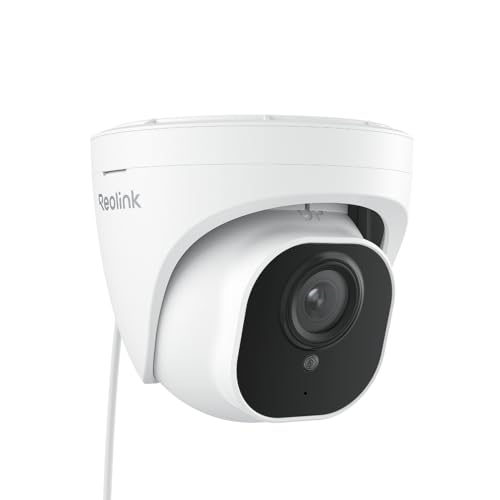
REOLINK RLC-820A 4K PoE Security Camera, Wired Outdoor Dome
$99.99The dome counterpart to the RLC-810A, same sensor and same detection, in a body that does not advertise which way it is looking.
- Resolution
- 8 MP
Prices change often.
Common questions
Can a 12MP camera with a 8 mm lens identify someone at 50 feet?
Its identify distance is about 93 ft, so at 50 feet it is still within identification range under the DORI standard, assuming good light and a square on view.
What is the difference between recognise and identify in the DORI standard?
Recognise, at 125 pixels per metre, means you can tell whether the person on screen is somebody you already know. Identify, at 250 pixels per metre, means a stranger could be picked out from the footage to an evidential standard. It takes twice the pixel density to go from one to the other, which halves the working distance of any given camera.
Does digital zoom extend these distances?
No. Digital zoom crops the image and scales it up, so it adds no pixels to the scene and the pixels per metre figure does not change. Only optical zoom or a longer fixed lens increases pixel density on a distant subject, which is why an optical zoom camera reaches identification distances that no amount of software can match.
Is a wider lens always worse for identification?
Yes, for a fixed sensor. A wider lens spreads the same 4512 horizontal pixels across more scene, so pixel density at any distance drops in proportion. The usual resolution is to use a wide lens for coverage and awareness, and to place one narrower lens on the single approach where you genuinely need to identify a face.
Get the system planning sheet
The camera count, storage and PoE budget worksheet, plus the wiring checklist, as one printable page.
Keep going
- Work out DORI distance for your own camera
- Lens field of view calculator
- The DORI standard explained
- What a 8 mm lens covers at 30 feet
- DORI distance for a 12MP camera with a 12 mm lens
- DORI distance for a 12MP camera with a 6 mm lens
- DORI distance for a 2MP (1080p) camera with a 2.8 mm lens
- DORI distance for a 4MP (1440p) camera with a 4 mm lens
Before you point a camera at anything. Aim cameras at your own property and your own boundary, never into a neighbour's windows or across their garden. Cameras in bedrooms, bathrooms, or anywhere else a person reasonably expects privacy are a serious legal problem, and that includes guests, lodgers and anyone who works in your home. Audio is legally different from video, many US states require the consent of every party to a recorded conversation, and several recorders capture audio by default, so check your own state before you enable it. Some places require visible notice that recording is taking place, and landlords and homeowner associations often impose their own rules on top. This is researched general information and not legal advice, and the law varies by state and by country.
And once it is installed. Change every default password, keep the firmware updated, and be clear with yourself about where the footage goes: a cloud camera means a third party holds recordings of your home, while a local recorder keeps them in your house. That is a genuine buying consideration, not a technicality.