ANNKE 8CH 4K System Review
The ANNKE 8CH 4K system is a $499.99 kit built around an 8 channel, 8MP-capable PoE recorder with a 2TB drive pre-installed and dual-light color night vision. If all eight channels were populated with 4K cameras, the same storage formula used across this site computes to about 3.6 days of continuous 24/7 recording, though this listing does not actually state how many cameras ship in the box.
ANNKE dual light system pairs an 8 channel, 8MP-capable NVR with a 2TB pre-installed drive and a color night vision feature built around a white light lamp rather than pure infrared. That last point is a genuine differentiator: infrared night vision returns monochrome footage, while a dual light camera can hold clothing and vehicle color after dark, which is often the single most useful detail in a police report.
This review works entirely from the specification fields and feature bullets published in this exact catalog listing, and is direct about the one important field this listing leaves blank.
| Spec | Value |
|---|---|
| Recorder channels | 8 |
| Supported resolution | 8MP (3840x2160) |
| Cameras included | Not stated in the published listing |
| Pre-installed drive | 2TB |
| Night vision | Dual light color mode, plus Smart IR up to 100 ft (published) |
| Weatherproofing | IP67 (published) |
| Price | $499.99 |
What the listing states, and the gap in it
The published specification for this system states 8 channels, 8MP resolution support and a 2TB pre-installed drive. It does not state how many cameras ship with the kit. That is worth flagging clearly, because a system title mentioning channel count is not the same claim as a stated camera count, and confirming the actual number of cameras included on the specific product page before ordering is the only way to know what actually arrives.
The features REOLINK, sorry, ANNKE publishes for this system include AI human and vehicle detection, 120 dB true wide dynamic range for handling harsh contrast between shadow and direct light, and IP67 weatherproofing for the camera housings.
Dual light night vision, what is published and what is not
ANNKE states the system infrared night vision, described as Smart IR, reaches up to 100 feet, and that switching to the dual light color mode replaces black-and-white infrared with a full color image using a built-in white light lamp. Both are the manufacturer own figures for this listing.
No lens focal length is published for this system, so an exact DORI (detect, observe, recognise, identify) distance cannot be computed here the way it can for a camera that does state its focal length, such as the standalone REOLINK RLC-810A reviewed separately on this site.
The visibility tradeoff of a white light lamp
A dual light camera trades stealth for detail. Pure infrared night vision is invisible to the human eye, so a subject on camera generally does not know they are being recorded in the dark. A white light lamp is visible the moment it activates, which can act as a deterrent in its own right but also announces the camera position to anyone nearby, including someone who might otherwise not have looked for it. Neither behavior is stated as a downside in the manufacturer feature text, but it follows directly from how the published dual light feature works.
Storage math for a fully populated system
Since the exact number of included cameras is not published, the useful number here is illustrative rather than a claim about the box contents: if all eight channels were populated with 8MP cameras recording continuously at the typical 6 Mbps H.265 convention, that is 8 times 2,700 MB per hour times 24, or 518,400 MB per day. Against the roughly 1,860,000 MB of usable space on a 2TB drive, that computes to about 3.6 days of continuous recording.
A system shipped with fewer than eight cameras would last proportionally longer on the same drive, since fewer streams are writing to it, which is one more reason the actual included camera count matters more than the channel count when estimating real-world storage days.
Is this a hands-on review
No. This is not a hands-on review. This system has not been installed or run on a property by anyone on this team. Every figure above is either quoted from the ANNKE listing or computed from those published figures, and the 3.6 day storage figure is explicitly labeled as an illustrative full-population case rather than a stated fact about this box contents.
Who should not buy this
Anyone who needs to know the exact number of cameras before ordering should confirm that figure on the specific product listing rather than assuming eight cameras ship simply because the recorder has eight channels.
Anyone who wants a computed DORI identify distance before buying will not find the focal length needed to calculate one published in this listing.
Anyone prioritizing a single trusted brand recorder ecosystem over price should compare this against the REOLINK RLK8-800B6, which states its included camera count directly.
The gear that matches this answer

ANNKE 8CH 4K PoE Security Camera System, Smart Dual Light, 2TB HDD
$499.99Dual light means the camera holds colour at night using a white light lamp instead of falling back to infrared monochrome, which matters because clothing colour is often the only usable detail.
- Channels
- 8
- Resolution
- 8 MP
- Drive included
- 2 TB
- Storage
- Local NVR
Prices change often.

REOLINK 8CH 4K Security Camera System with 2TB HDD RLK8-800B6
$755.99Six 4K bullet cameras on an eight channel PoE recorder with a 2TB drive already fitted, which is the configuration most three bedroom homes land on after doing the entry point count.
- Channels
- 8
- Cameras included
- 6
- Resolution
- 8 MP
- Drive included
- 2 TB
Prices change often.

ANNKE 16 Channel Security Camera System 4K PoE, Smart Dual Light, 4TB HDD
$849.99Sixteen channels of 4K with a 4TB drive, priced below the equivalent sixteen channel systems from the larger brands.
- Channels
- 16
- Resolution
- 8 MP
- Drive included
- 4 TB
- Storage
- Local NVR
Prices change often.

Lorex V-Series 8Ch 4K NVR System with 4 Bullet Cameras
$879.99Lorex runs its own app and does local processing on the recorder, and publishes a clear position on where footage is held, which is the question worth asking before a camera watches a front door.
- Channels
- 8
- Cameras included
- 4
- Resolution
- 8 MP
- Storage
- Local NVR
Prices change often.
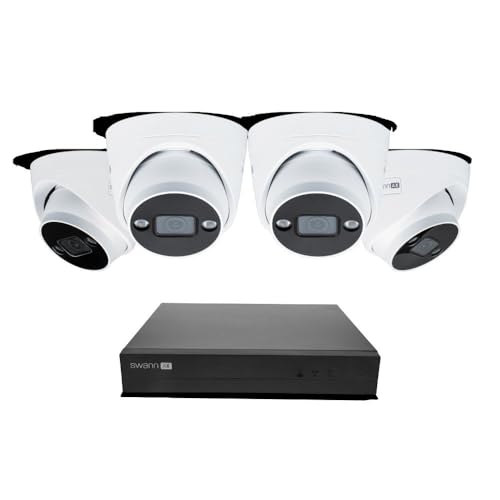
Swann AdvancedX Wired NVR 4K Security Camera System, 8 Channels, 4 PoE Dome Cameras
$487.59Four 4K domes and an eight channel recorder, and Swann publishes full local access so the system keeps working if the company ever stops running an app.
- Channels
- 8
- Cameras included
- 4
- Resolution
- 8 MP
- Storage
- Local NVR
Prices change often.
Common questions
How many cameras come with the ANNKE 8CH 4K system?
The published specification for this listing states the channel count and resolution but does not state how many cameras ship in the box. Confirm the actual included camera count on the specific product page before ordering, since an 8 channel recorder does not necessarily mean 8 cameras are included.
How does dual light night vision differ from standard infrared?
Standard infrared night vision returns a monochrome image regardless of the actual scene color. Dual light uses a built-in white light lamp to produce a full color image at night, which preserves details like clothing and vehicle color that infrared cannot show, at the cost of the light being visible to anyone nearby.
How long will the 2TB drive record for?
If all eight channels were populated with 8MP cameras recording continuously at the typical 6 Mbps H.265 convention, the drive usable capacity computes to about 3.6 days. Fewer installed cameras extend that figure proportionally, since fewer streams write to the same drive.
What is the actual identify distance for these cameras?
This listing does not publish a lens focal length, which is required to compute a DORI identify distance. Without that figure, no honest distance can be stated for this system; a camera listing that states its focal length, such as the REOLINK RLC-810A, allows that calculation.
Is this system compatible with non-ANNKE cameras?
This listing does not state cross-brand compatibility, and camera systems in this price range are generally built to work reliably only with the matching brand hardware. Assume this system is intended for ANNKE cameras unless the manufacturer states otherwise.
Get the system planning sheet
The camera count, storage and PoE budget worksheet, plus the wiring checklist, as one printable page.
Keep going
Before you point a camera at anything. Aim cameras at your own property and your own boundary, never into a neighbour's windows or across their garden. Cameras in bedrooms, bathrooms, or anywhere else a person reasonably expects privacy are a serious legal problem, and that includes guests, lodgers and anyone who works in your home. Audio is legally different from video, many US states require the consent of every party to a recorded conversation, and several recorders capture audio by default, so check your own state before you enable it. Some places require visible notice that recording is taking place, and landlords and homeowner associations often impose their own rules on top. This is researched general information and not legal advice, and the law varies by state and by country.
And once it is installed. Change every default password, keep the firmware updated, and be clear with yourself about where the footage goes: a cloud camera means a third party holds recordings of your home, while a local recorder keeps them in your house. That is a genuine buying consideration, not a technicality.