REOLINK RLN8-410 NVR Review
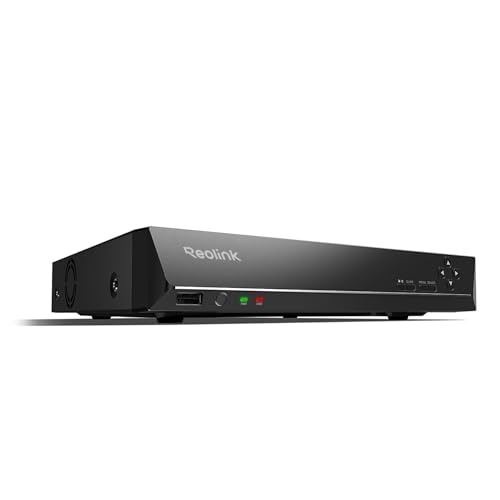
The REOLINK RLN8-410 is a $349.99 8 channel PoE NVR with 8 built-in PoE ports, sold with no hard drive included. Paired with a 4TB drive and eight 8MP cameras at the typical H.265 bitrate convention, the same math that sizes any 8 camera 4K system computes to about 7.2 days of continuous 24/7 recording.
The RLN8-410 is a bare recorder: eight PoE ports, eight recording channels, and no drive or cameras included. That makes it the right starting point for anyone who wants to choose their own drive size and camera mix rather than accepting a bundled kit, and it also means every capacity and power number below has to be built up from the buyer own choices rather than read off one box.
This review is a look at what REOLINK publishes for this specific recorder listing, what a buyer needs to supply themselves, and one figure the listing simply does not state.
| Spec | Value |
|---|---|
| Recording channels | 8 |
| Built-in PoE ports | 8 |
| Camera compatibility | REOLINK PoE cameras only (published) |
| PoE cable run | Up to 330 ft (published) |
| Total PoE power budget | Not published |
| Hard drive included | No, sold separately |
| Price | $349.99 |
What is actually in this box
Eight PoE ports built into the recorder mean cameras get both power and data from the recorder itself, with no separate PoE switch to buy or budget. REOLINK states this recorder only works with REOLINK PoE cameras, so it is not a route to mixing camera brands.
No hard drive ships with this recorder. The published listing does not state a total PoE power budget in watts for the eight ports either, which is the one gap worth flagging clearly: anyone pairing this recorder with power-hungry cameras, such as a PTZ model with a heater, should confirm the actual wattage ceiling from the manufacturer datasheet and run their camera list through the PoE power budget calculator rather than assuming a figure.
The cable run REOLINK publishes
REOLINK states a PoE cable run of up to 330 feet for cameras connected to this recorder. That figure sits essentially at the 100 meter (about 328 foot) ANSI/TIA-568 Ethernet channel limit, so it reads as a rounded metric conversion rather than a claim of exceeding the standard. A run genuinely approaching either figure should be checked with the cable run limit calculator, since patch leads at both ends count against the same total.
Sizing a drive for this recorder
Because no drive ships with the RLN8-410, storage days depend entirely on the drive purchased and the cameras attached. Pairing this recorder with eight 8MP cameras and a 4TB surveillance drive, such as the Seagate Skyhawk reviewed separately, uses the same math that sizes the RLK16-800B8 bundled kit: at the typical 6 Mbps H.265 convention, eight cameras write about 518,400 MB per day, and a 4TB drive usable capacity of about 3,720,000 MB divides out to roughly 7.2 days of continuous 24/7 recording.
Buying a smaller drive or fewer cameras changes that figure directly and predictably; the NVR storage days calculator runs the same formula for any camera count, bitrate and drive size a buyer wants to check before purchasing.
A bare recorder is a bigger project than a kit
Choosing this recorder over a bundled kit means pricing three separate line items rather than one: the recorder itself at $349.99, a set of REOLINK-compatible PoE cameras, and a surveillance-rated drive sized to that camera count and resolution. For someone building toward eight full 4K cameras, that total will typically land above the $1,259.99 the fully bundled RLK16-800B8 charges for the same eight cameras and a 4TB drive together, since a bundle spreads its per-unit cost across a factory assembly line rather than a retail markup on each separate part.
The case for buying the bare recorder anyway is control: choosing a specific drive brand and warranty length, choosing camera models individually rather than accepting whichever body style shipped in the box, and adding cameras one at a time as a budget allows rather than committing to all of them up front.
Is this a hands-on review
No. This is not a hands-on review. This recorder has not been wired to cameras or run continuously by anyone on this team. The figures above are drawn from the published listing and computed using the standard storage and Ethernet formulas documented on this site.
Who should not buy this
Anyone who wants to mix camera brands should look elsewhere; REOLINK states this recorder only works with REOLINK PoE cameras, unlike a standards-based recorder such as the TRENDnet TV-NVR1508.
Anyone who wants a single purchase with a drive already sized to the camera count should buy a bundled kit like the RLK8-800B6 instead, since this recorder requires choosing and buying a drive separately.
A property needing more than eight cameras should look at the 16 channel RLN16-410 rather than running two separate 8 channel recorders.
The gear that matches this answer

REOLINK RLN8-410 8CH NVR Network Video Recorder PoE
$349.99Eight PoE ports built into the recorder, so the cameras get power and data from the same box and there is no separate switch to budget.
- Channels
- 8
- PoE ports
- 8
Prices change often.
REOLINK RLN16-410 16CH NVR Network Video Recorder PoE
$459.99Sixteen channels for a property that has outgrown eight, and the usual reason to buy one is a detached garage or a second building.
- Channels
- 16
Prices change often.

ANNKE 12MP 8CH PoE Network Video Recorder, No HDD
$159.99Supplied without a drive, which is the cheaper path when you are fitting a surveillance drive sized from your own retention calculation rather than accepting whatever came in the box.
- Channels
- 8
- Resolution
- 12 MP
- PoE ports
- 8
Check first:No hard drive is included. Budget for a surveillance rated drive separately.
Check price on AmazonPrices change often.

TRENDnet 8-Channel UHD PoE NVR, TV-NVR1508
$107.99TRENDnet is a networking company rather than a camera company, and this recorder takes standards compliant cameras rather than locking to one brand.
- Channels
- 8
- PoE ports
- 8
Prices change often.

Lorex V-Series 4K 8-Ch 1TB Network Video Recorder
$399.99Ships with a 1TB drive already fitted, which is enough for four cameras for about two weeks and is a sensible starting point to expand from.
- Channels
- 8
- Drive included
- 1 TB
Prices change often.
Common questions
Does the RLN8-410 come with a hard drive?
No. This recorder ships without a drive, and REOLINK does not state a default capacity anywhere in the listing. A surveillance-rated drive, such as a Seagate Skyhawk or Western Digital Purple, must be purchased and installed separately before the recorder can store any footage.
What is the total PoE power budget for the eight ports?
This listing does not publish a total wattage figure for the eight built-in PoE ports. Anyone planning to run power-hungry cameras, such as a PTZ model with a heater, on this recorder should confirm the real budget from the manufacturer datasheet and check their camera list against the PoE power budget calculator before buying.
Can I use non-REOLINK cameras with this recorder?
REOLINK states in the listing that this recorder only works with REOLINK PoE cameras. A recorder built to open standards, such as the TRENDnet TV-NVR1508, is the better starting point for mixing camera brands.
How many days of recording can I expect with a 4TB drive?
Paired with eight 8MP cameras at the typical 6 Mbps H.265 bitrate convention, a 4TB drive computes to about 7.2 days of continuous 24/7 recording. Fewer cameras, a lower resolution, or motion-only recording all extend that figure.
How far can cameras be run from this recorder?
REOLINK states a PoE cable run of up to 330 feet, which lands essentially at the 100 meter (about 328 foot) ANSI/TIA-568 Ethernet channel limit most structured cabling follows. A run approaching that distance should be checked with the cable run limit calculator before the cable is pulled.
Get the system planning sheet
The camera count, storage and PoE budget worksheet, plus the wiring checklist, as one printable page.
Keep going
Before you point a camera at anything. Aim cameras at your own property and your own boundary, never into a neighbour's windows or across their garden. Cameras in bedrooms, bathrooms, or anywhere else a person reasonably expects privacy are a serious legal problem, and that includes guests, lodgers and anyone who works in your home. Audio is legally different from video, many US states require the consent of every party to a recorded conversation, and several recorders capture audio by default, so check your own state before you enable it. Some places require visible notice that recording is taking place, and landlords and homeowner associations often impose their own rules on top. This is researched general information and not legal advice, and the law varies by state and by country.
And once it is installed. Change every default password, keep the firmware updated, and be clear with yourself about where the footage goes: a cloud camera means a third party holds recordings of your home, while a local recorder keeps them in your house. That is a genuine buying consideration, not a technicality.