UPS Runtime Calculator for an NVR
Runtime is set by usable battery energy against the real load, not by the VA number on the box. A 100 Wh UPS carrying a 40 W recorder and switch runs for roughly 100 minutes.
Values update as you change the inputs. Where a figure cannot be computed honestly from what manufacturers publish, this calculator says so rather than showing a zero.
Battery backup for a recorder
Chosen for this calculation.

APC BE600M1 UPS Battery Backup and Surge Protector
$79.99Enough to carry a recorder, a PoE switch and the router through the short outages that make up most of them, which is when a camera system is most likely to be needed.
- Rating
- 600 VA
Prices change often.

APC BE650G1 Battery Backup 650VA 390W Uninterruptible Power Supply
$109.99APC publishes both the VA and the watt rating on this one, and the watt figure is the only one that lets you compute a real runtime.
- Rating
- 650 VA
- Output
- 390 W
Prices change often.

APC BE425M UPS Battery Backup and Surge Protector for Small Electronics
$62.50The smallest unit here, adequate for a recorder and a router but not for a recorder plus a loaded PoE switch.
- Rating
- 425 VA
Prices change often.

CyberPower EC850LCD Ecologic UPS Battery Backup and Surge Protector
$119.95A display that reports the actual load in watts, which turns a runtime estimate into a measurement.
- Rating
- 850 VA
Prices change often.
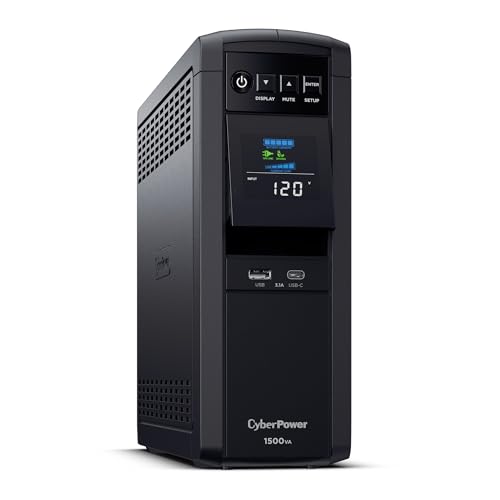
CyberPower CP1500PFCLCD PFC Sinewave UPS Battery Backup and Surge Protector
$239.95A true sine wave output, which is what the switching power supplies in a recorder and a PoE switch actually want, and enough capacity to run a full system for a meaningful time.
- Rating
- 1500 VA
Prices change often.
The formula
minutes = (battery Wh x usable fraction x inverter efficiency) / load W x 60
A lead-acid UPS will not flatten its battery, and the inverter loses energy converting it, so both factors reduce the answer below the headline capacity. Cutting the power is the oldest defeat there is, which makes a UPS the cheapest meaningful upgrade to a finished system.
Common questions
How long will a 100Wh UPS run a security camera recorder?
With an 85 percent inverter efficiency and 80 percent usable battery capacity, both realistic figures rather than the headline number on the box, a 100 Wh UPS carrying a 40 W load of a recorder and switch runs for roughly 102 minutes, close to an hour and 40 minutes, before the battery is fully exhausted.
Why does a UPS runtime not match its rated watt hour capacity?
Two real losses eat into the headline figure. The inverter that converts battery power to usable output loses some energy in conversion, commonly around 15 percent, and most batteries are not run all the way to zero, so only around 80 percent of rated capacity is usable in practice. Both factors together pull actual runtime well below the printed watt hour number.
Is the VA rating on a UPS box the same as its watt rating?
No, and mixing them up is a common sizing mistake. VA, volt amps, is not the same as watts once a load has a power factor below 1, so a UPS rated 150 VA might only supply around 90 to 100 real watts. Always size a UPS against the actual watt load of a recorder, switch and router combined, never the VA figure alone.
What load should I include when sizing a UPS for a security system?
Add up the recorder own power draw, the PoE switch total budget if cameras run through it, and the router or modem that keeps the system online during an outage. Leaving out the switch is a common mistake, since a recorder with no network path to its cameras is not actually protecting anything during a power cut.
Is a UPS worth adding to an already finished camera system?
Yes. Cutting power is one of the oldest and simplest ways to defeat a camera system, since a recorder with no battery backup stops recording the instant power goes out, exactly when an intruder is most likely to have caused that outage on purpose. A UPS sized for even 30 to 60 minutes of runtime closes that specific gap cheaply.
Get the system planning sheet
The camera count, storage and PoE budget worksheet, plus the wiring checklist, as one printable page.
Keep going
A calculated figure is a planning number, not a promise. Every answer here comes from published standards and manufacturer specifications, and real installations vary with light, weather, scene motion and how a camera is actually aimed. Where a figure cannot be computed honestly from what manufacturers publish, this calculator says so rather than showing a zero.
Before you point a camera at anything. Aim at your own property and your own boundary, never into a neighbour's windows. Cameras in bedrooms, bathrooms or anywhere with a reasonable expectation of privacy are a serious legal problem, including for guests and anyone who works in your home. Audio is legally different from video, many US states require the consent of every party to a recorded conversation, and several recorders capture audio by default, so check your own state before enabling it. This is researched general information and not legal advice.