Power Backup for a Security System
A UPS runtime is set by usable battery energy against the real load, not the VA number printed on the box. Runtime in minutes equals battery watt-hours times a usable fraction times inverter efficiency, divided by the load in watts, multiplied by 60. Cutting the power is the oldest way to defeat a security system, which makes a UPS the cheapest meaningful upgrade to a finished setup.
A finished camera system with a good switch, a capable recorder and cameras placed correctly still has one obvious point of failure left over: the wall outlet. Cutting power is the oldest and simplest way to defeat a security system, and it requires no skill at all. A UPS closes that gap, and it does it for less money than almost any other upgrade on a finished system.
The catch is that most UPS shopping decisions are made from a number on the box, the VA rating, that does not answer the question a camera system owner actually needs answered: how many minutes will this keep my switch and recorder running.
| Battery capacity | Real load | Usable fraction | Inverter efficiency | Runtime |
|---|---|---|---|---|
| 300 Wh | 40 W | 80% | 85% | About 5.1 hours |
| 300 Wh | 80 W | 80% | 85% | About 2.6 hours |
| 600 Wh | 60 W | 80% | 85% | About 6.8 hours |
Why a UPS is the cheapest upgrade to a finished system
A camera system that goes dark the moment someone flips a breaker or cuts a service line outside has recorded nothing about the minutes that matter most. A UPS sitting between the wall and the PoE switch keeps the switch, the cameras and the recorder running through a short outage and through the specific outage someone causes on purpose. It is a smaller expense than almost any camera on the system and it protects all of them at once.
The VA number on the box is not the watt rating
UPS units are commonly labeled with a volt-amp, or VA, figure that is larger than the real watt capacity because of the power factor of the load. A unit rated 600 VA is not a 600 watt unit; its actual watt rating, which is the number that matters for a real load of switches and a recorder, is printed separately and is meaningfully smaller. Sizing a UPS from the VA figure alone overstates what it can actually carry.
Always check the watt rating specifically, not the VA rating, before matching a UPS to a PoE switch and recorder's combined draw.
How UPS runtime is actually calculated
Runtime in minutes comes from four numbers: the battery's capacity in watt-hours, the fraction of that capacity that is actually usable, the inverter's efficiency converting stored DC energy to the AC power the equipment draws, and the load itself in watts. The formula is runtime minutes equals (battery watt-hours times usable fraction times inverter efficiency) divided by load watts, then multiplied by 60.
Two real-world losses shrink the answer well below what a naive "watt-hours divided by watts" calculation suggests. A lead-acid UPS battery is not run down to zero; roughly 80 percent of its rated capacity is realistically usable before the unit shuts down to protect the battery. And the inverter itself loses energy converting battery DC to outlet AC, typically running around 85 percent efficient. Both of those losses are real and both reduce runtime below the number a shopper might expect from the watt-hour figure alone.
Sizing a UPS for a PoE switch and NVR
Add up the actual load: the PoE switch's recommended budget (not just the cameras' nameplate draw, but the switch's PSE-side reservation, since that is what it is actually pulling from the wall), plus the recorder's own power draw. That combined watt figure is the load to plug into the runtime formula, not the switch's maximum rated capacity if it is running well under that ceiling in practice.
A heavier load shortens runtime for the same battery in direct proportion, which is why adding cameras to an existing PoE switch, or letting heaters push cameras into a higher power class in winter, quietly shortens the UPS runtime a household is depending on without anyone changing the UPS itself.
Battery cameras as a backup power path
A camera running entirely on its own battery, independent of the wall, keeps working through an outage that takes down a wired PoE camera on the same UPS once that UPS itself runs out. That is a genuine advantage of the wireless path during a power event. The tradeoff is that battery cameras lose real usable capacity in cold weather, so a battery camera relied on for backup coverage during winter storms deserves a fresh charge and a realistic expectation of shorter runtime than the same battery gives in mild weather.
Mains wiring, transfer switches and generators are licensed work
A UPS plugs into an existing outlet and requires no electrical work. Anything beyond that, a dedicated circuit for the security equipment, a transfer switch tied to a whole-home generator, or new wiring to a detached structure, is licensed electrician work in most jurisdictions and is not something to take on as a weekend project.
The gear that matches this answer

APC BE600M1 UPS Battery Backup and Surge Protector
$79.99Enough to carry a recorder, a PoE switch and the router through the short outages that make up most of them, which is when a camera system is most likely to be needed.
- Rating
- 600 VA
Prices change often.

APC BE650G1 Battery Backup 650VA 390W Uninterruptible Power Supply
$109.99APC publishes both the VA and the watt rating on this one, and the watt figure is the only one that lets you compute a real runtime.
- Rating
- 650 VA
- Output
- 390 W
Prices change often.

APC BE425M UPS Battery Backup and Surge Protector for Small Electronics
$62.50The smallest unit here, adequate for a recorder and a router but not for a recorder plus a loaded PoE switch.
- Rating
- 425 VA
Check first:Not enough capacity to also carry a fully loaded PoE switch.
Check price on AmazonPrices change often.

CyberPower EC850LCD Ecologic UPS Battery Backup and Surge Protector
$119.95A display that reports the actual load in watts, which turns a runtime estimate into a measurement.
- Rating
- 850 VA
Prices change often.
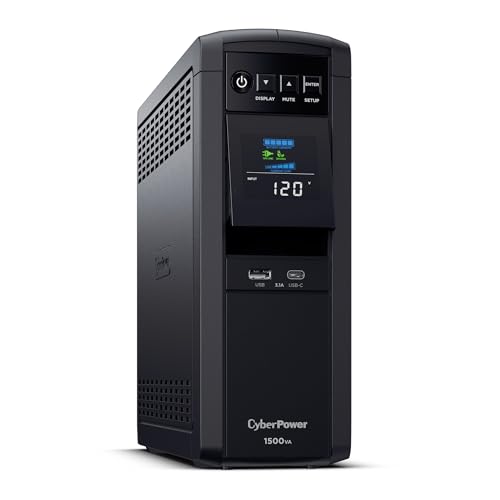
CyberPower CP1500PFCLCD PFC Sinewave UPS Battery Backup and Surge Protector
$239.95A true sine wave output, which is what the switching power supplies in a recorder and a PoE switch actually want, and enough capacity to run a full system for a meaningful time.
- Rating
- 1500 VA
Prices change often.
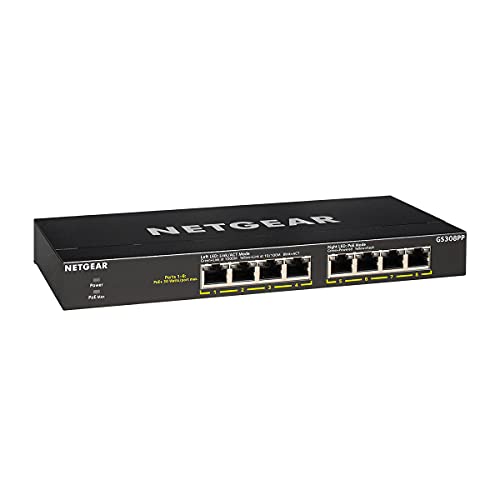
NETGEAR 8-Port PoE Gigabit Ethernet Unmanaged Network Switch GS308PP
$69.99An 83 W budget across eight PoE ports, which carries six to eight class 3 cameras with the headroom that stops a switch shutting a port down on a cold night when the heaters run.
- PoE ports
- 8
- PoE budget
- 83 W
- PoE standard
- 802.3af/at
Prices change often.
Common questions
Is a 600 VA UPS enough for a PoE switch and an NVR?
It depends on the watt rating printed on the unit, not the 600 VA figure, and on the combined draw of the switch's PoE budget plus the recorder. Add up the real watt load first, check the UPS's actual watt rating, and run the numbers through the runtime formula before assuming a given VA size is enough.
Why does my UPS run out faster than the watt-hour math suggests?
Two real losses are not optional: a lead-acid battery is only about 80 percent usable before the UPS shuts down to protect it, and the inverter converting battery power to outlet power loses roughly 15 percent along the way. Both reduce actual runtime below a simple watt-hours divided by watts estimate.
Does adding more cameras to my PoE switch shorten my UPS runtime?
Yes. Runtime is inversely proportional to load, so adding cameras, or letting existing cameras jump to a higher PoE class when their heaters engage in cold weather, increases the watt draw the UPS has to support and shortens the number of minutes it can run before it depletes.
Can a battery powered camera work during a power outage that takes down my wired system?
Yes, a fully battery powered camera keeps recording independent of both mains power and any UPS, since it never draws from either. That is a real advantage during an outage, though its own battery still loses usable capacity in cold weather, so it deserves a fresh charge going into winter rather than an assumption that summer runtime carries over.
Do I need an electrician to install a UPS for my security system?
No, a standard UPS plugs into an existing outlet like any other appliance. An electrician becomes necessary only if the plan grows beyond that, such as a dedicated circuit for the security equipment or a transfer switch tied to a whole-home generator, both of which are licensed work in most places.
Get the system planning sheet
The camera count, storage and PoE budget worksheet, plus the wiring checklist, as one printable page.
Keep going
Before you point a camera at anything. Aim cameras at your own property and your own boundary, never into a neighbour's windows or across their garden. Cameras in bedrooms, bathrooms, or anywhere else a person reasonably expects privacy are a serious legal problem, and that includes guests, lodgers and anyone who works in your home. Audio is legally different from video, many US states require the consent of every party to a recorded conversation, and several recorders capture audio by default, so check your own state before you enable it. Some places require visible notice that recording is taking place, and landlords and homeowner associations often impose their own rules on top. This is researched general information and not legal advice, and the law varies by state and by country.
And once it is installed. Change every default password, keep the firmware updated, and be clear with yourself about where the footage goes: a cloud camera means a third party holds recordings of your home, while a local recorder keeps them in your house. That is a genuine buying consideration, not a technicality.
Size the UPS to the real combined watt load of the switch and recorder, not to the VA number on the box.