Lightning and Surge Protection for Cameras
A long copper Ethernet or power run between separate buildings, such as to a detached garage or barn, is a genuine surge path during a nearby lightning strike. Fibre with media converters removes that risk entirely because there is no copper conductor between the two structures for a surge to travel along.
Surge protection for a camera system is a real engineering consideration on any run that leaves one building for another, not a formality tacked onto a sales pitch. Copper conducts, and a long cable strung between a house and a detached structure is, electrically speaking, exactly the kind of path a nearby strike can induce a damaging surge into, even without a direct hit on the cable itself.
| Setup | Copper between buildings | Surge risk | Practical mitigation |
|---|---|---|---|
| All cameras on the main house switch | No | Low; ordinary household surge exposure only | A surge protected UPS on the switch and NVR |
| Camera on a detached garage via long Ethernet | Yes | Real; induced surge from a nearby strike is possible | Dedicated surge protection at both ends, or fibre |
| Camera on a detached barn or distant structure | Yes, and longer | Higher than the garage case due to run length | Fibre with media converters recommended |
| Wireless or battery camera on a detached structure | No copper run at all | Lowest; no cable to conduct a surge | No additional surge hardware needed for that line |
Why an outbuilding camera is a real lightning risk
Two separate buildings, particularly a house and a detached garage or barn, do not necessarily share the same electrical ground potential during a lightning event. A long copper cable connecting equipment in both buildings becomes a path for that potential difference, or for a surge induced directly into the cable by a nearby strike, to travel along, and it can carry that energy into a switch, an NVR, or a camera at either end.
What actually happens during a strike or a near strike
Damage does not require a direct hit on the cable or the building. A strike within a few hundred meters can induce a substantial voltage spike into a long conductor through electromagnetic coupling alone, and that induced surge travels along the cable to whatever is plugged into either end. This is why equipment can be damaged by a strike that never touched the property directly, and it is a genuine risk specifically on runs with copper between separate structures.
The fibre option: removing copper between buildings entirely
Running fibre optic cable between buildings with a media converter at each end removes this risk at its source rather than trying to absorb or divert a surge after the fact. Fibre carries no electrical conductor, so there is nothing for a surge to travel along between the two structures. This is the most complete solution available for a run that genuinely needs to cross between separate buildings, and it is worth the added cost specifically on runs where lightning exposure is a real concern, such as a detached structure some distance from the main house.
Surge protected UPS units as the practical layer in-building
For equipment that stays within a single building, a UPS with built in surge protection provides a meaningful, practical layer of protection against surges arriving through the electrical service itself, which is a more common event than a direct lightning strike. This does not remove risk on a copper run leaving the building the way fibre does, but it is a reasonable and inexpensive protection for the switch and recorder against the more everyday surges that travel in on household wiring.
Grounding is a licensed electrician job
Proper grounding and bonding, which is the foundation any surge protection scheme relies on, is licensed electrician work and code governed in most places. Do not attempt to add or modify grounding rods, bonding jumpers, or service panel grounding as a do-it-yourself project; a poorly executed ground can make a surge protection setup worse than none at all rather than better.
PoE injectors, extenders and surge exposure
Every additional copper hop in a run, a PoE extender, an injector, or a long patch cable strung outdoors between structures, is another length of conductor exposed to the same induction risk described above. This is not a reason to avoid PoE extenders on a single-building run, but it is a reason to treat any copper crossing between buildings as the specific segment that deserves either fibre or, at minimum, dedicated surge protection at both ends.
A realistic risk assessment for a home system
Not every home camera system needs fibre. A system entirely contained within one building, running from a single PoE switch to cameras mounted on that same structure, carries a meaningfully lower lightning risk than a system with a run out to a detached garage or barn. Reserve the fibre conversation specifically for runs that actually cross between separate structures, and treat a surge protected UPS as sufficient for the in-building portion of most home setups.
The gear that matches this answer

APC BE600M1 UPS Battery Backup and Surge Protector
$79.99Enough to carry a recorder, a PoE switch and the router through the short outages that make up most of them, which is when a camera system is most likely to be needed.
- Rating
- 600 VA
Prices change often.

APC BE650G1 Battery Backup 650VA 390W Uninterruptible Power Supply
$109.99APC publishes both the VA and the watt rating on this one, and the watt figure is the only one that lets you compute a real runtime.
- Rating
- 650 VA
- Output
- 390 W
Prices change often.

CyberPower CP1500PFCLCD PFC Sinewave UPS Battery Backup and Surge Protector
$239.95A true sine wave output, which is what the switching power supplies in a recorder and a PoE switch actually want, and enough capacity to run a full system for a meaningful time.
- Rating
- 1500 VA
Prices change often.
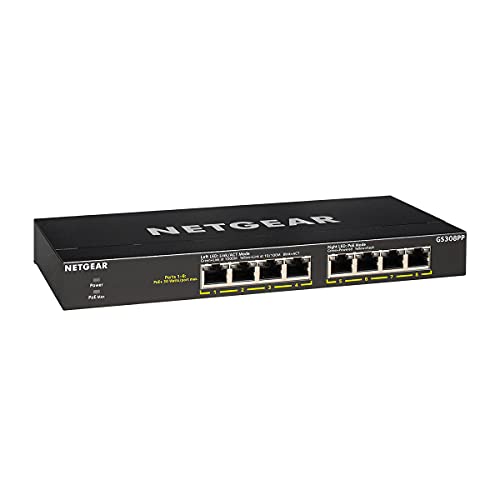
NETGEAR 8-Port PoE Gigabit Ethernet Unmanaged Network Switch GS308PP
$69.99An 83 W budget across eight PoE ports, which carries six to eight class 3 cameras with the headroom that stops a switch shutting a port down on a cold night when the heaters run.
- PoE ports
- 8
- PoE budget
- 83 W
- PoE standard
- 802.3af/at
Prices change often.
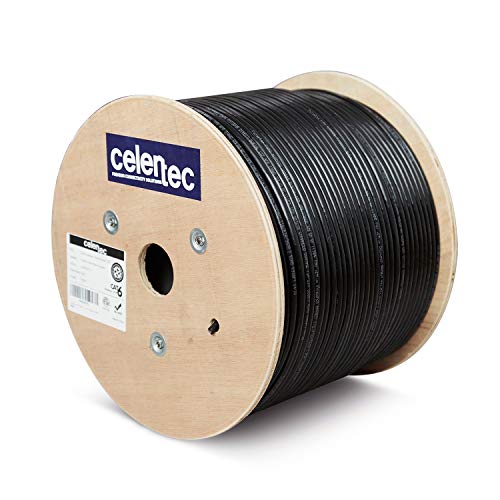
celertec CAT6 Outdoor Cable, 1000ft, 23AWG Solid Bare Copper, Unshielded
$219.99Solid bare copper at 23AWG for noticeably less than the TRUE CABLE equivalent, for outdoor runs that are not being buried.
- Cable category
- Cat6
- Conductor gauge
- 23 AWG
- Conductor
- Solid bare copper
- Length
- 1000 ft
Prices change often.
Common questions
Do I really need to worry about lightning if my cameras are all on the same building?
The risk is meaningfully lower for a system entirely contained within one building than for one with a run crossing to a detached structure. A surge protected UPS on the switch and recorder is a reasonable and proportionate protection for that in-building case, since the main remaining exposure is ordinary surges arriving through the household electrical service.
Why does fibre remove lightning risk when a surge protector does not fully eliminate it?
A surge protector diverts or clamps an electrical surge after it has already entered a copper conductor. Fibre optic cable carries no electrical conductor at all between the two buildings, so there is nothing for a surge to travel along in the first place. It removes the risk at its source rather than managing it after the fact.
Can a lightning strike damage my cameras without hitting my property directly?
Yes. A strike within a few hundred meters can induce a significant voltage spike into a long conductor through electromagnetic coupling alone, without any direct contact. This induced surge then travels along the cable to equipment at either end, which is why a distant strike can still damage a camera system on a long copper run.
Is a UPS with surge protection enough for a camera run to a detached garage?
It helps, but it does not remove the risk the way fibre does, since the copper run between the buildings remains the path a surge can travel along. For a run that genuinely crosses to a separate structure, fibre with media converters at both ends is the more complete solution; a surge protected UPS is better suited to protecting equipment within a single building.
Can I install my own grounding rod for surge protection?
This is licensed electrician work and code governed in most places, and it is not a reasonable do-it-yourself project. A poorly executed ground can create a worse outcome than no added grounding at all, since surge protection schemes depend on that ground being done correctly.
Get the system planning sheet
The camera count, storage and PoE budget worksheet, plus the wiring checklist, as one printable page.
Keep going
Before you point a camera at anything. Aim cameras at your own property and your own boundary, never into a neighbour's windows or across their garden. Cameras in bedrooms, bathrooms, or anywhere else a person reasonably expects privacy are a serious legal problem, and that includes guests, lodgers and anyone who works in your home. Audio is legally different from video, many US states require the consent of every party to a recorded conversation, and several recorders capture audio by default, so check your own state before you enable it. Some places require visible notice that recording is taking place, and landlords and homeowner associations often impose their own rules on top. This is researched general information and not legal advice, and the law varies by state and by country.
And once it is installed. Change every default password, keep the firmware updated, and be clear with yourself about where the footage goes: a cloud camera means a third party holds recordings of your home, while a local recorder keeps them in your house. That is a genuine buying consideration, not a technicality.
Reserve fibre for runs that actually cross between separate buildings; a surge protected UPS is proportionate protection for equipment that stays within one structure.