Cat5e vs Cat6 for PoE Cameras
Data rate is never the deciding factor: a 4K camera at roughly 6 Mbps uses well under 1 percent of a gigabit link, and both Cat5e and Cat6 are fully rated for gigabit and for PoE. What actually matters is the conductor: solid bare copper in either category beats copper clad aluminium in any category, and Cat6's thicker 23AWG wire has less voltage drop than Cat5e's 24AWG on a long powered run.
This comparison gets argued as a speed question, and it should not be. A security camera, even a 4K one running H.265 at around 6 Mbps, uses a tiny fraction of what either Cat5e or Cat6 can carry, and both categories are explicitly rated for gigabit Ethernet and for PoE under IEEE 802.3. If bandwidth were the whole story, this page would not need to exist.
The real, honest difference is conductor thickness and material. Cat6 cable is typically wound with 23AWG conductors while Cat5e is typically 24AWG, and the thicker wire carries less resistance, which matters specifically on a long run that is also delivering PoE power. Far more important than either category, though, is whether the cable uses solid bare copper or copper clad aluminium, a distinction that has nothing to do with Cat5e versus Cat6 at all.
| Factor | Cat5e | Cat6 |
|---|---|---|
| Gigabit Ethernet | Fully rated | Fully rated |
| PoE compliant | Yes, af/at/bt | Yes, af/at/bt |
| Typical conductor gauge | 24AWG | 23AWG |
| Voltage drop on a long run | Slightly higher | Slightly lower |
| Where it wins | Short or indoor runs, lower cost | Long runs, high power class cameras |
Is Cat6 actually faster for a security camera?
Not in any way that matters. A gigabit link carries 1,000 Mbps, and even a demanding 12MP camera at 8 Mbps in H.265 is using less than 1 percent of that capacity. Cat5e is rated for gigabit Ethernet over the full 100 metre channel just as Cat6 is, so a data bottleneck is not something a security camera install is likely to run into on either cable, on any realistic run length.
So why does the category matter at all?
Because PoE is not just data, it is also delivered power, and power delivery cares about resistance. A 23AWG conductor, common in Cat6, has meaningfully less resistance over a given length than a 24AWG conductor, common in Cat5e, and less resistance means less voltage drop by the time the power reaches the camera at the far end of a long run. On a short indoor run this difference is negligible. On a long outdoor run feeding a camera with heaters or a PTZ head near the standard's upper power limits, it becomes worth choosing the thicker gauge.
What actually matters more than Cat5e vs Cat6?
The conductor material. Solid bare copper is the material both categories are supposed to use, and it is what every wiring standard assumes. Copper clad aluminium, sold as a cheaper alternative in either category, has only about 60 percent of copper's conductivity and sits outside the wiring standards for powered runs entirely. A Cat6 cable made with CCA can perform worse on a PoE run than a Cat5e cable made with solid bare copper, which makes checking the conductor material a bigger priority than checking the category number.
- Solid bare copper: the assumed material in both ANSI/TIA-568 and IEEE 802.3
- Copper clad aluminium: roughly 60 percent of copper's conductivity, outside spec for powered runs
- Always confirm "solid bare copper" on the listing before buying bulk cable
Is Cat5e ever the right choice, honestly?
Yes, for most indoor and short outdoor runs. If a camera run is under, say, 30 metres and is not sharing a path with a heated housing or a PTZ camera near the top of the PoE power budget, Cat5e with a solid bare copper conductor is entirely adequate and is usually the cheaper cable per foot. Spending more for Cat6 on a short, low power run is not wrong, but it is not buying anything a camera install will notice.
When should Cat6 be the deliberate choice?
On long runs approaching the 100 metre ANSI/TIA-568 channel limit, especially to a camera drawing near the top of a PoE class, such as a heated PTZ housing under 802.3bt's 71.3 W delivered ceiling. The thicker 23AWG conductor keeps more of that power intact by the time it reaches the camera, which is the one place the category genuinely earns its higher price.
The verdict
Buy solid bare copper first, category second. For short or indoor runs feeding a standard fixed camera, Cat5e with solid bare copper is money well saved. For long outdoor runs, especially to a heated or PTZ camera near the top of its PoE class, Cat6 with solid bare copper is worth the extra cost for the lower voltage drop. Never buy copper clad aluminium for a powered run, in either category.
The gear that matches this answer
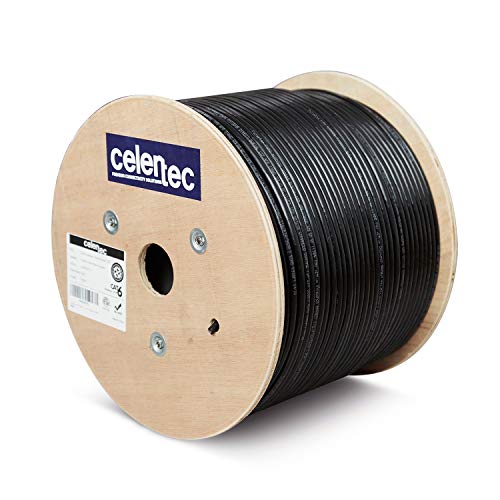
celertec CAT6 Outdoor Cable, 1000ft, 23AWG Solid Bare Copper, Unshielded
$219.99Solid bare copper at 23AWG for noticeably less than the TRUE CABLE equivalent, for outdoor runs that are not being buried.
- Cable category
- Cat6
- Conductor gauge
- 23 AWG
- Conductor
- Solid bare copper
- Length
- 1000 ft
Prices change often.

TRUE CABLE Cat6 Direct Burial Bulk Ethernet Cable, Unshielded, 1000ft, 23AWG Solid Bare Copper
$277.99Direct burial rated with a solid bare copper conductor at 23AWG, which is the thickest common gauge and therefore the least voltage drop over a long PoE run.
- Cable category
- Cat6
- Conductor gauge
- 23 AWG
- Conductor
- Solid bare copper
- Length
- 1000 ft
Prices change often.

AiCat Cat5e Ethernet Cable 500ft Riser CMR, Solid Bare Copper
$98.99Cat5e is fully rated for gigabit and for PoE, and for a 4K camera at 8 Mbps it is not remotely the bottleneck, so this is where to save money rather than on the conductor material.
- Cable category
- Cat5e
- Conductor
- Solid bare copper
- Length
- 500 ft
Prices change often.

Voltive Cat5e Ethernet Cable, Riser CMR, 500ft, 24AWG Solid Bare Copper
$109.99Riser rated for running between floors, with a published solid bare copper conductor.
- Cable category
- Cat5e
- Conductor gauge
- 24 AWG
- Conductor
- Solid bare copper
- Length
- 500 ft
Prices change often.
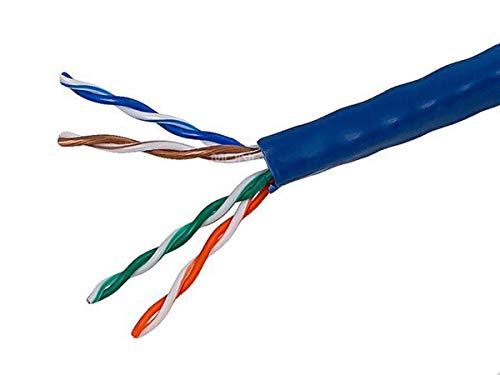
Monoprice Cat5e Ethernet Bulk Cable, Solid, 350MHz, UTP, CMR
$79.82The cheapest solid conductor bulk cable here from a seller that publishes its specifications honestly.
- Cable category
- Cat5e
- Conductor
- Solid
- Length
- 500 ft
Prices change often.
Common questions
Will a 4K camera saturate a Cat5e connection?
No, by a wide margin. A 4K camera running H.265 typically sustains around 6 Mbps, while Cat5e carries a full gigabit, meaning the camera is using well under 1 percent of the available bandwidth. Data throughput is not a reason to choose Cat6 over Cat5e for a security camera on either cable.
How do I know if a bulk cable is copper clad aluminium?
The listing should explicitly say "solid bare copper" or "CCA" or "copper clad aluminium." If a cable is priced noticeably below comparable listings and does not clearly state the conductor material, treat that as a warning sign rather than an oversight, since CCA is the usual reason for an unusually low price on bulk Ethernet cable.
Does Cat6 really reduce voltage drop enough to matter?
On a short run, not enough to notice. On a long run near the 100 metre ANSI/TIA-568 limit feeding a camera near the top of its PoE power class, the thicker 23AWG conductor in Cat6 carries meaningfully less resistance than 24AWG Cat5e, which can be the difference between a camera powering up reliably and one that intermittently drops out in cold weather when resistance rises slightly further.
Can I mix Cat5e and Cat6 on the same PoE run?
Technically the segments will still work, since both meet the same PoE electrical standard, but doing so mixes the resistance and bandwidth characteristics of the whole run and makes fault finding harder later. It is better practice to keep a single run one category end to end, even if that means standardizing on Cat6 throughout a property with any long runs.
Is shielded cable worth it for a security camera run?
Only when the run parallels mains electrical wiring or a long fence line prone to interference, since shielded cable must be properly grounded at one end or the shield can make interference worse rather than better. For a typical residential run with no such interference source nearby, unshielded solid bare copper cable is the simpler and equally reliable choice.
Get the system planning sheet
The camera count, storage and PoE budget worksheet, plus the wiring checklist, as one printable page.
Keep going
Before you point a camera at anything. Aim cameras at your own property and your own boundary, never into a neighbour's windows or across their garden. Cameras in bedrooms, bathrooms, or anywhere else a person reasonably expects privacy are a serious legal problem, and that includes guests, lodgers and anyone who works in your home. Audio is legally different from video, many US states require the consent of every party to a recorded conversation, and several recorders capture audio by default, so check your own state before you enable it. Some places require visible notice that recording is taking place, and landlords and homeowner associations often impose their own rules on top. This is researched general information and not legal advice, and the law varies by state and by country.
And once it is installed. Change every default password, keep the firmware updated, and be clear with yourself about where the footage goes: a cloud camera means a third party holds recordings of your home, while a local recorder keeps them in your house. That is a genuine buying consideration, not a technicality.